
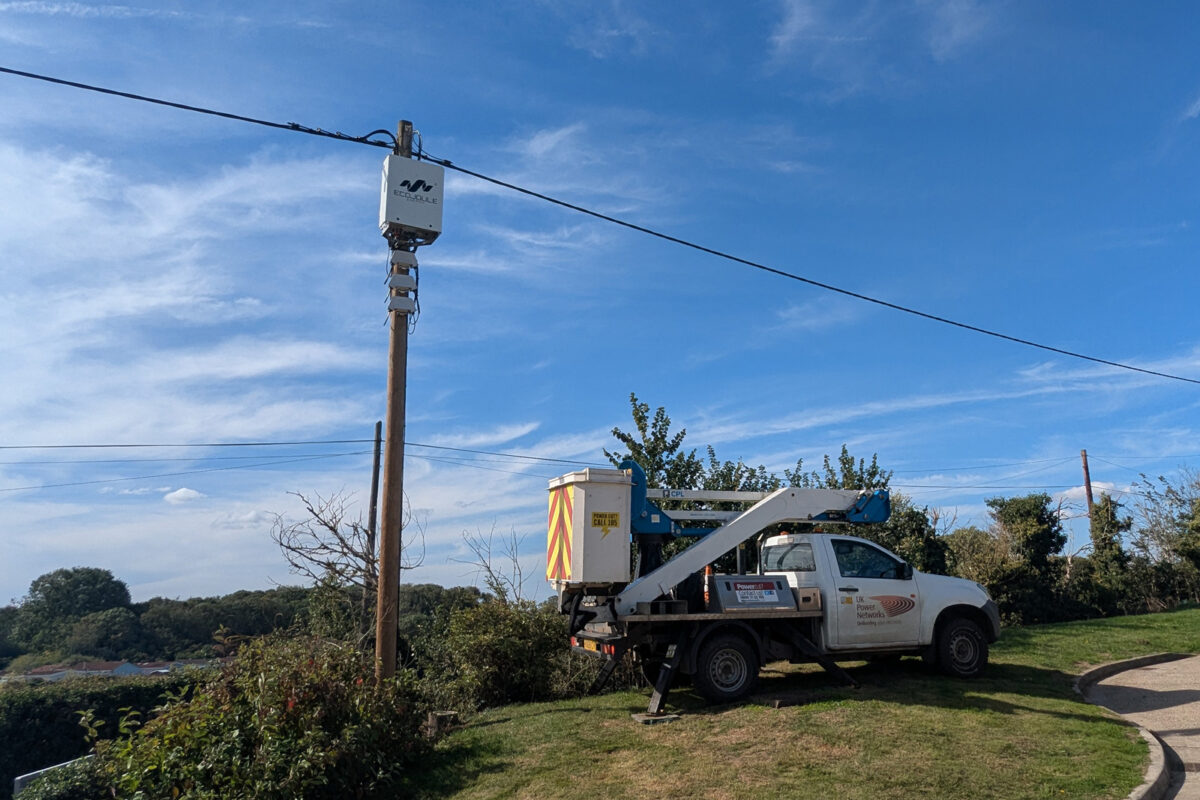
Efficient deployment of the EcoVAR begins before the unit leaves the warehouse. Utilities that have built repeatable installation programmes have converged on a practical site selection methodology that balances electrical performance with installation practicality.
Start with the voltage problem, not the substation
The EcoVAR is a point-of-connection device. Its reactive power compensation, phase balancing, and active harmonic filtering act locally — so placement relative to the voltage problem matters.
Utility field experience with the EcoVAR suggests the optimum investment-to-benefit placement on most low voltage feeders is between the halfway and two-thirds point along the feeder length. That zone is the starting point for site assessment, not the substation end where access is easiest.
Smart meter data has made this assessment considerably more precise. Utilities with advanced metering infrastructure can identify specific spans and phases where voltage deviations are most frequent and most severe, reducing the selection process to a short list of candidate poles rather than a manual survey of the full feeder.
Practical constraints shift the selection, but rarely far
Once the electrically preferred location is identified, the assessment turns to what is already on the pole. Streetlighting attachments, distribution fuses, telecommunications equipment, and vegetation encroachment each add time, cost, or safety risk to installation. Where the optimal pole carries a heavy load of existing equipment or access is constrained, utilities move to the next viable pole in either direction along the feeder.
This trade-off is manageable because the EcoVAR’s installation footprint is small. A standard installation does not require a supply outage and can be completed in under two hours. The cost of shifting one or two spans from the theoretical optimum is low relative to the cost of managing a congested pole or scheduling vegetation clearing.
An action bias is often the right economic decision
Because the EcoVAR can be relocated if a better site is later identified, over-engineering the initial site selection carries its own cost. Utilities that treat the first installation as a testable hypothesis — rather than a permanent capital commitment requiring exhaustive pre-work — generally reach resolution faster and at lower total cost.
The practical rule that has emerged across experienced deployment programmes: identify the voltage problem zone, find the cleanest pole in that zone, install. Refine if the data warrants it.