
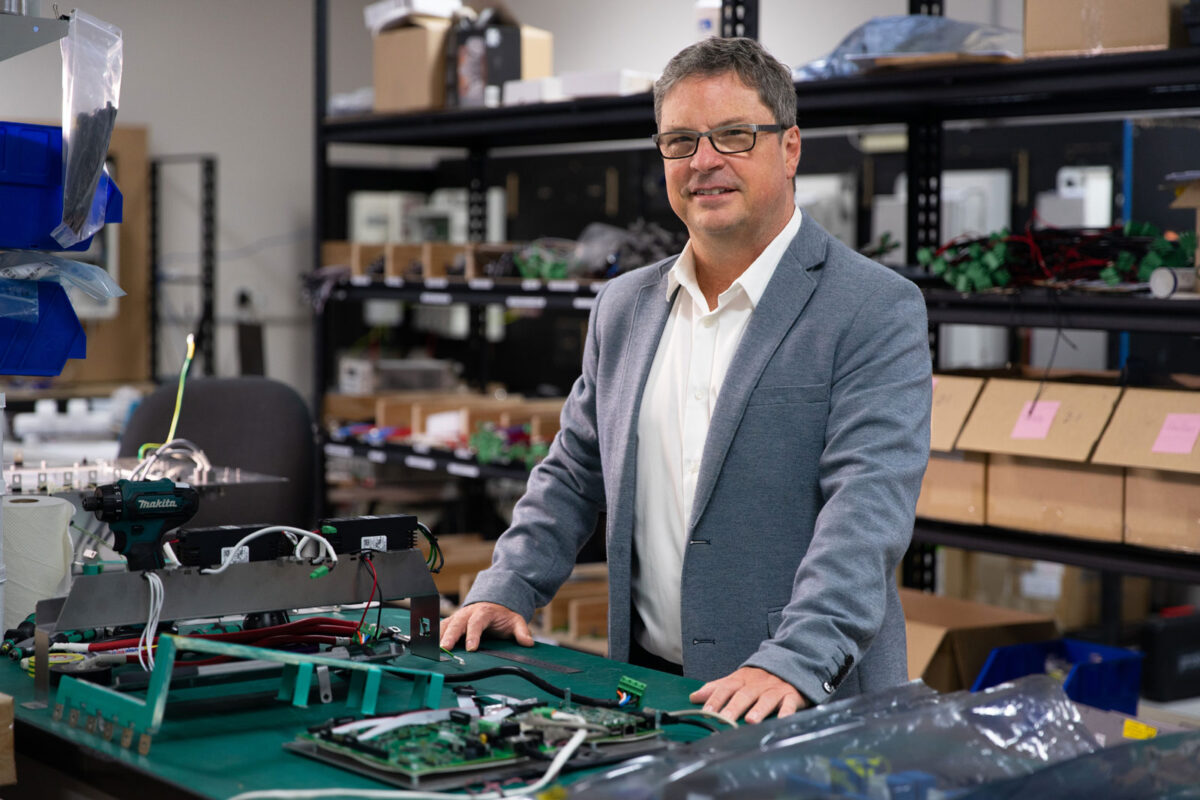
By Mike Wishart, Founder & CEO, EcoJoule Energy
As Australia accelerates its transition to renewable energy and retail energy prices continue to rise, initiatives like the Commonwealth Government’s Solar Sharer program are a positive step forward.
Encouraging households to use electricity during the middle of the day, when rooftop solar generation is at its peak, makes sense. It rewards consumers, supports clean energy utilisation, and helps reduce reliance on fossil fuel generation during other parts of the day.
However, as with any major shift in how and when energy is consumed, there are technical realities that must be carefully managed.
The Solar Sharer concept is simple: offer households a defined window of free or heavily discounted electricity during peak solar production hours. The goal is to soak up excess generation and avoid curtailment. But when thousands, or potentially millions, of households respond to the same pricing signal at the same time, the impact on local low-voltage networks can be significant.
Electricity distribution networks were not designed for synchronised behaviour at this scale. Historically, household demand has been relatively diverse and staggered. People cook, run appliances, and charge devices at different times. This natural diversity smooths out demand peaks.
Programs like Solar Sharer risk compressing that diversity into a narrow window. When the free power period begins, EV chargers ramp up simultaneously. Home batteries switch into charging mode. Pool pumps, air conditioners, hot water systems, and high-load appliances are programmed to start. While the intent is to align demand with solar supply, the local network can experience rapid voltage rises, swings, and phase imbalances.
Voltage management at the low-voltage level is becoming one of the most critical challenges of the energy transition. High rooftop solar penetration already creates periods of elevated voltage in many suburbs. Adding synchronised demand spikes on top of high generation can cause voltage instability in both directions.
These fluctuations are not just theoretical. Excessive voltage swings can trigger inverter protection settings, leading to solar export curtailment. Sensitive equipment can also be affected by poor power quality. Transformers and distribution assets may experience additional thermal stress. Over time, unmanaged localised stress accelerates wear and increases maintenance costs for network operators.
Importantly, this is not an argument against Solar Sharer or similar programs. On the contrary, they are well-intentioned and necessary as we rethink how to better integrate distributed renewable energy. But price signals alone are a blunt instrument. They need to be supported by intelligent, localised voltage and power quality management.
The grid is no longer a one-way system. It is dynamic, bidirectional, and increasingly decentralised. That means solutions must exist not only at substations and along feeders, but also behind the meter, within homes, businesses, and community assets.
Smart voltage regulation technology can provide the responsive buffering required to smooth these synchronised events. By dynamically absorbing or supplying reactive power, managing voltage levels in real time, and stabilising local phases, advanced systems can prevent the cascading effects of large-scale behavioural shifts.
This is where infrastructure innovation becomes critical. The energy transition is not just about adding more solar panels or batteries. It is about ensuring that the foundational electrical architecture can handle new usage patterns safely and reliably.
At EcoJoule Energy, we see this challenge firsthand. Our EcoVAR and EcoSTORE technologies are specifically designed to strengthen low-voltage networks in high renewable penetration environments. EcoVAR actively manages voltage and power factor in real time, smoothing fluctuations and improving power quality. EcoSTORE provides fast-response energy storage that can absorb excess generation or support demand spikes, reducing strain on local assets.
Together, these systems help create a more resilient and flexible grid at the edge. They allow innovative programs like Solar Sharer to succeed without compromising stability. Instead of networks reacting to volatility, they become adaptive and self-balancing.
Australia is leading the world in rooftop solar adoption. That leadership brings both opportunity and responsibility. As we introduce new market mechanisms to better utilise renewable energy, we must ensure the technical foundations keep pace.
The future of energy is distributed, digital, and dynamic. By combining smart policy with smarter infrastructure, we can unlock the full value of programs like Solar Sharer — delivering lower costs, cleaner power, and a stable grid for all Australians.
The transition is happening. The question is not whether we move forward, but how intelligently we do it.
About Mike Wishart
Electronics industry veteran Mike Wishart founded EcoJoule Energy in 2014 after a long career in the power electronics industry. EcoJoule Energy develops and deploys Low Voltage Distribution STATCOMs and Battery Energy Storage Systems (BESS) for electricity distribution networks. The company’s EcoVAR platform is in service across four continents. In 2025, the company raised $15 million of growth capital from investors, including Ellerston Capital and the Clean Energy Finance Corporation (CEFC).