
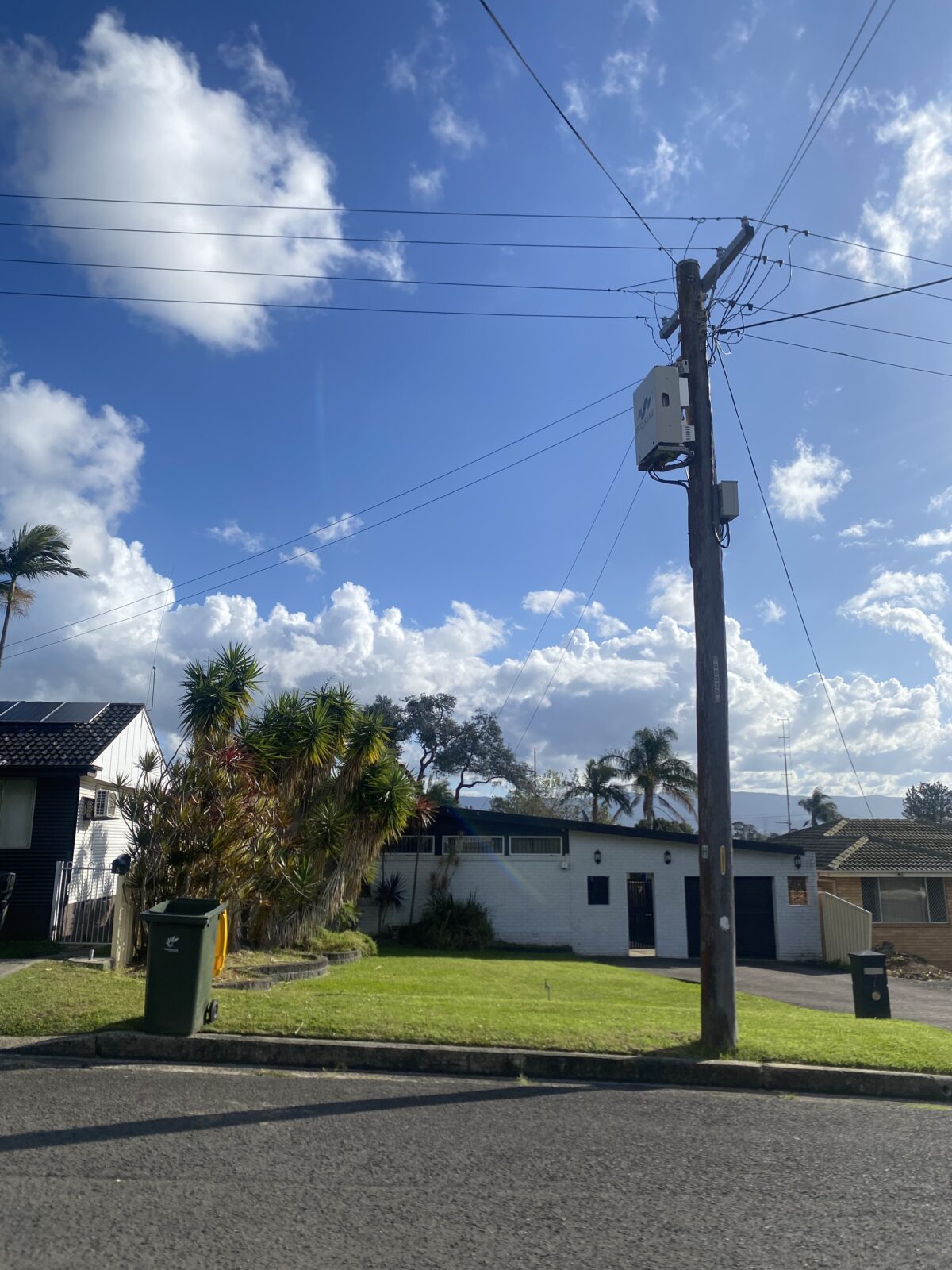
The EcoVAR runs Volt-VAR droop and active power phase balancing at the same time. A priority setting decides which control gives way when a phase reaches its rating. Matching that setting to the X/R ratio of the network gets more correction from the same unit.
Two controls, one rating
Volt-VAR droop. Each phase injects capacitive VARs when its voltage is low and absorbs inductive VARs when it is high, with a configurable dead band around nominal. All three phases share one droop curve but respond to their own measured voltage, so one phase can inject while another absorbs.
Active power phase balancing. The EcoVAR draws active power from the high-voltage (lightly loaded) phase and returns it to the low-voltage (heavily loaded) phases. It has no energy store, so the three phase active powers always sum to zero. Phase voltage is the proxy for phase loading, so no series CTs are needed. Balancing also reduces neutral current back to the transformer.
| Control | Corrects voltage unbalance | Corrects average voltage |
| Volt-VAR droop (Q) | Yes, per phase | Yes |
| Active power balancing (P) | Yes | No: P₁ + P₂ + P₃ = 0 |
If all three phases are high, for example during midday solar export, active power balancing cannot lower them. Only reactive power absorption can.
Priority modes and when to use them
Both controls run continuously. The priority setting acts only when a phase reaches its apparent power limit, and decides which control is curtailed.
| Setting | Capacity first to | Remaining capacity to | Suited to |
| Q-Priority | Volt-VAR droop | Phase balancing | Reactive networks (higher X/R): overhead feeders with a significant reactive component; sites close to the transformer |
| P-Priority | Phase balancing | Volt-VAR droop | Resistive networks (lower X/R): underground LV cable; long, small-conductor or heavily loaded LV feeders |
ΔV ≈ (R·P + X·Q) / V
Where X dominates, a VAR moves voltage further than a watt. Where R dominates, a watt moves voltage further than a VAR. P-Priority is most effective where low X/R coincides with significant phase imbalance, such as single-phase rooftop solar or EV charging concentrated on one phase.
The priority can be changed remotely through the EcoFLEET™ Fleet Manager after commissioning. Parameter details are in section 5.4 of the EcoVAR User Manual.