EcoJoule Energy Batteries Power More Solar into Victorian Electricity Network

EcoJoule Energy is helping Victorian households make better use of rooftop solar following the successful installation of ten pole-mounted neighbourhood batteries across AusNet’s electricity distribution network.

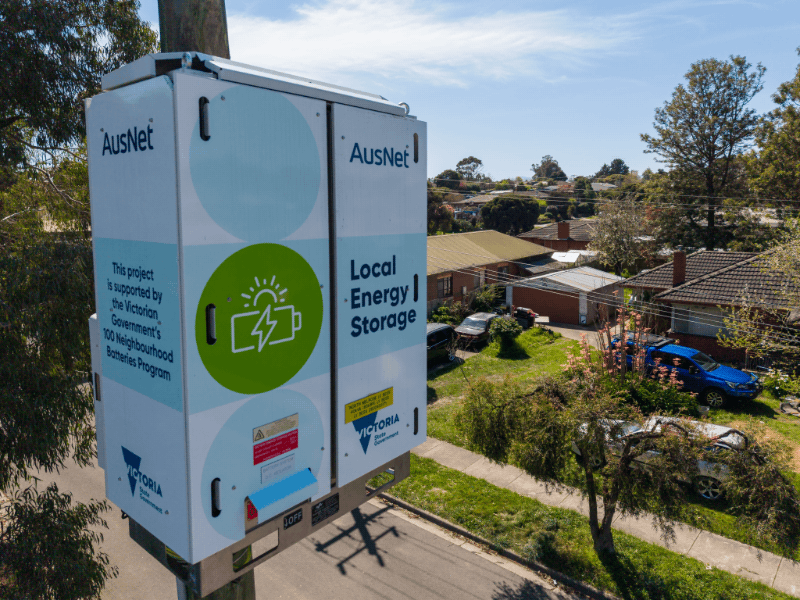
The batteries, delivered as part of the Victorian Government’s 100 Neighbourhood Battery Program, are now operational across ten Victorian communities, supporting 1,777 households and helping create a smarter, more flexible electricity network.

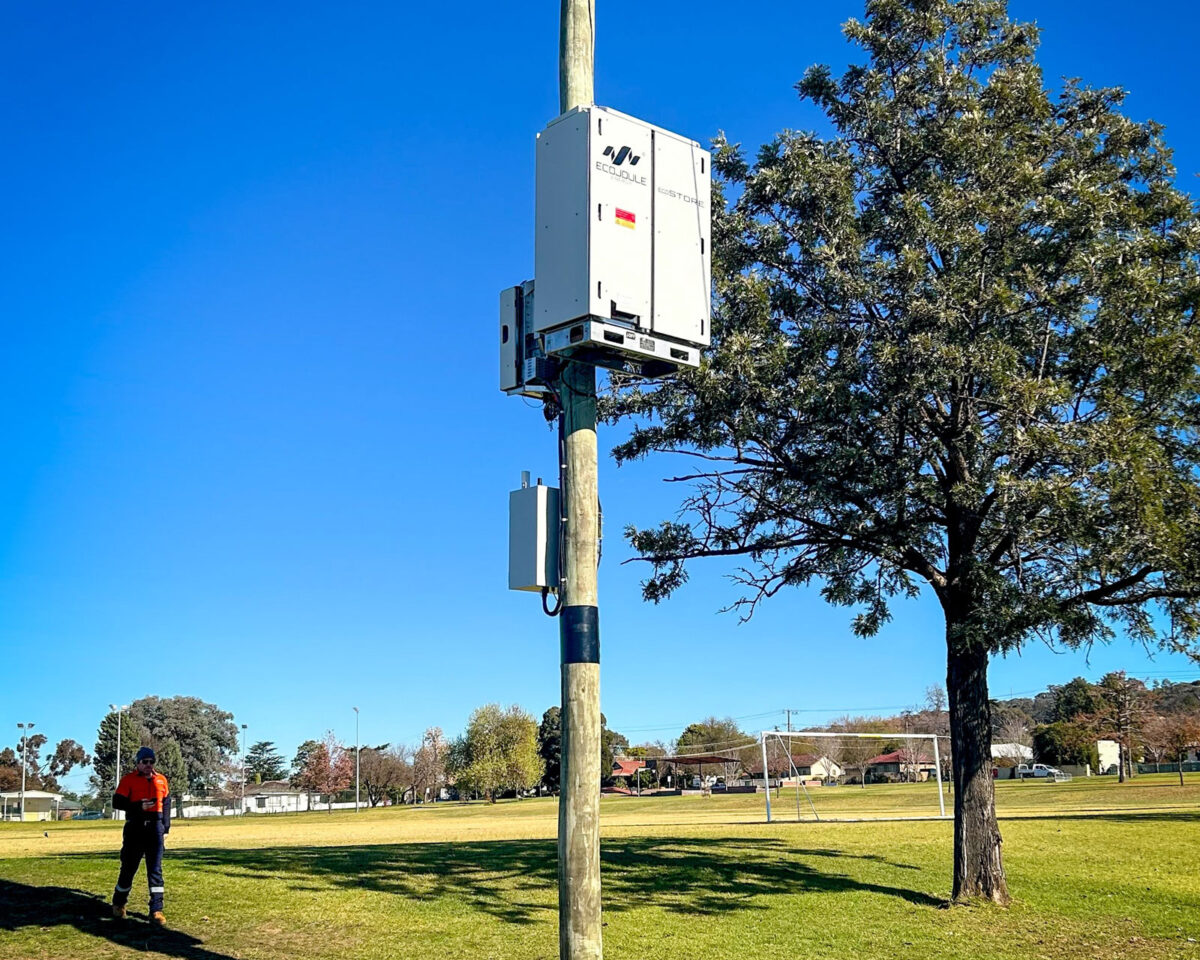
Developed by EcoJoule Energy, the pole-mounted EcoSTORE battery energy storage systems capture excess rooftop solar generation during the day and release stored energy back into the local electricity network when demand increases, particularly during the evening peak.

The installations are located in Coldstream, Diamond Creek, Ferntree Gully, Heathmont, Knoxfield, Lysterfield, Smiths Beach, Traralgon, Wantirna and Wantirna South.

EcoJoule Energy co-founder and CEO Dr Mike Wishart said the project demonstrated the important role distributed battery storage could play in addressing the challenges created by Australia’s rapid uptake of rooftop solar.

“Australia has led the world in rooftop solar adoption, but our electricity networks were never designed to manage large volumes of electricity flowing back into the grid from individual households,” Dr Wishart said.

“By installing battery storage directly into the low-voltage network, we can capture more of that locally generated renewable energy and make it available when households need it most.

“This is a practical example of how Australian-developed technology can help electricity distributors unlock more value from existing infrastructure while supporting the transition to renewable energy.”

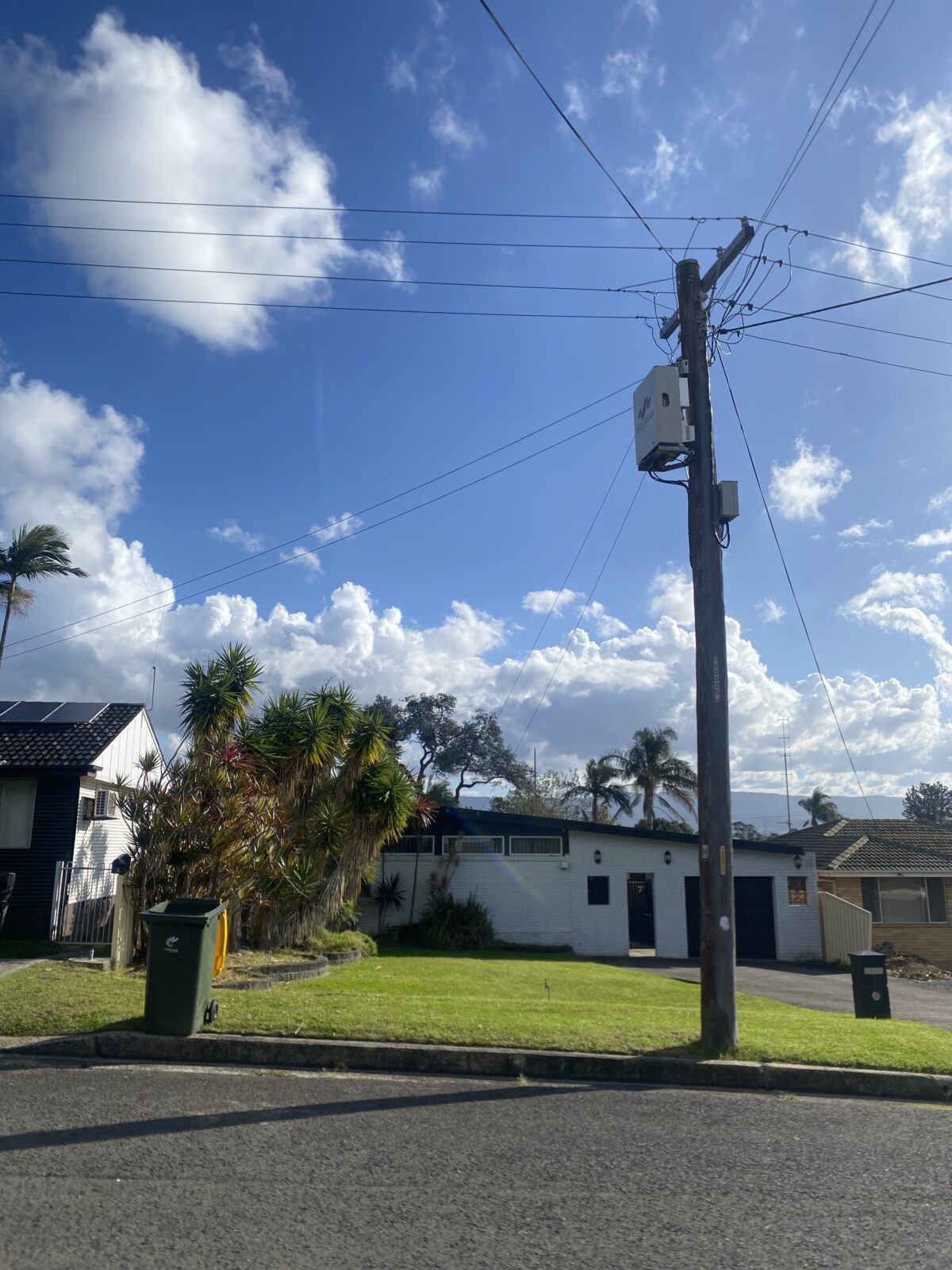
The compact batteries, approximately the size of a bar fridge, are installed on existing electricity poles in areas with high levels of rooftop solar generation.

According to AusNet, the batteries can collectively supply enough electricity to power up to 50 homes for two hours after sunset under normal network operating conditions.

The installations also help maintain consistent voltage levels for more than 100 surrounding homes, creating opportunities for additional rooftop solar connections, household electrification and electric vehicle charging.

AusNet General Manager Strategy & Regulation Charlotte Eddy said the batteries were helping communities make better use of locally generated renewable energy.

“The batteries act like miniature energy banks, storing solar energy during the day and making it available later, helping manage peak electricity use in the local area and creating capacity for more rooftop solar and household electrification,” Ms Eddy said.

The installations form part of a broader shift towards distributed energy storage, which allows electricity distributors to manage local network constraints without relying exclusively on traditional network upgrades.
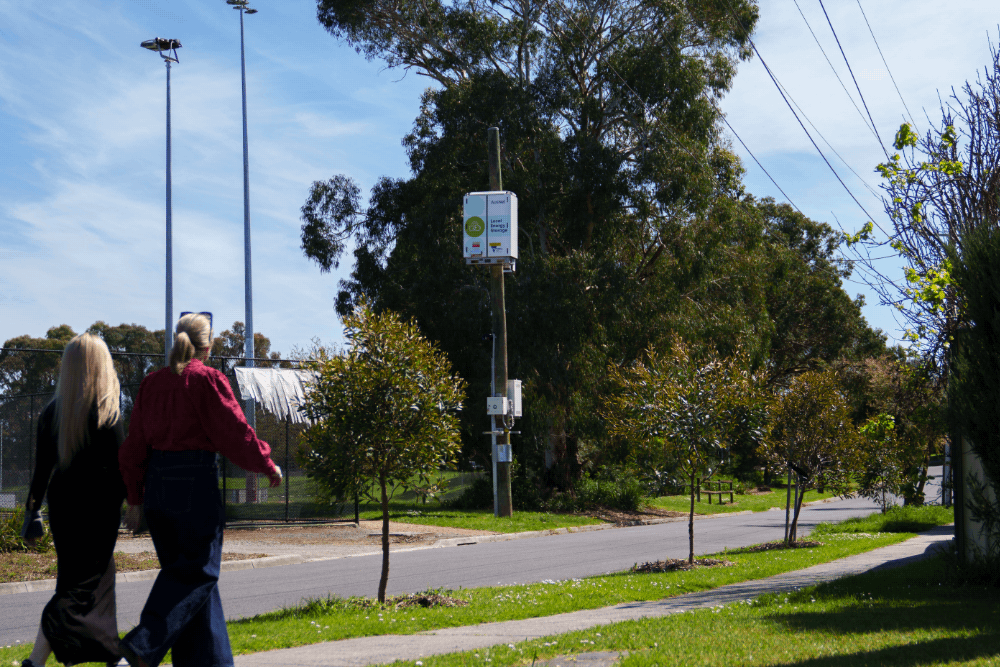
EcoJoule Energy’s EcoSTORE technology has been designed specifically for deployment within low-voltage electricity networks, combining battery storage with advanced power electronics and network management capabilities.

Unlike large-scale battery installations connected to transmission or high-voltage distribution networks, pole-mounted systems can be deployed close to where electricity is generated and consumed.

Dr Wishart said the ability to manage energy storage and voltage at a local level would become increasingly important as more households installed solar panels, batteries and electric vehicles.

“The energy transition is changing how electricity moves through our networks. Instead of electricity flowing in one direction from large generators to customers, we now have millions of households generating, storing and consuming electricity at different times,” he said.

“Technologies such as EcoSTORE give network operators additional flexibility to manage these changes while maintaining reliable electricity supply.

“Importantly, they can also help create the network capacity needed to accommodate more renewable energy without the cost and disruption of major infrastructure upgrades.”

AusNet said the project would also help it reassess areas where solar exports are currently constrained, potentially allowing more households to export additional electricity into the network.

Dr Wishart congratulated AusNet and the Victorian Government on the successful rollout.

“We’re extremely proud to see EcoJoule technology supporting Victorian communities and delivering real benefits to households and the electricity network,” he said.

“Projects like this demonstrate what can be achieved when innovative Australian technology is combined with forward-thinking network operators.

“We look forward to building on this success and helping more communities across Australia and internationally benefit from smarter, more flexible electricity networks.”

The Victorian installations add to EcoJoule Energy’s growing portfolio of distributed energy technology projects in Australia and overseas.
EcoJoule Energy Wins Innovation Award at 2026 AFR Energy Awards

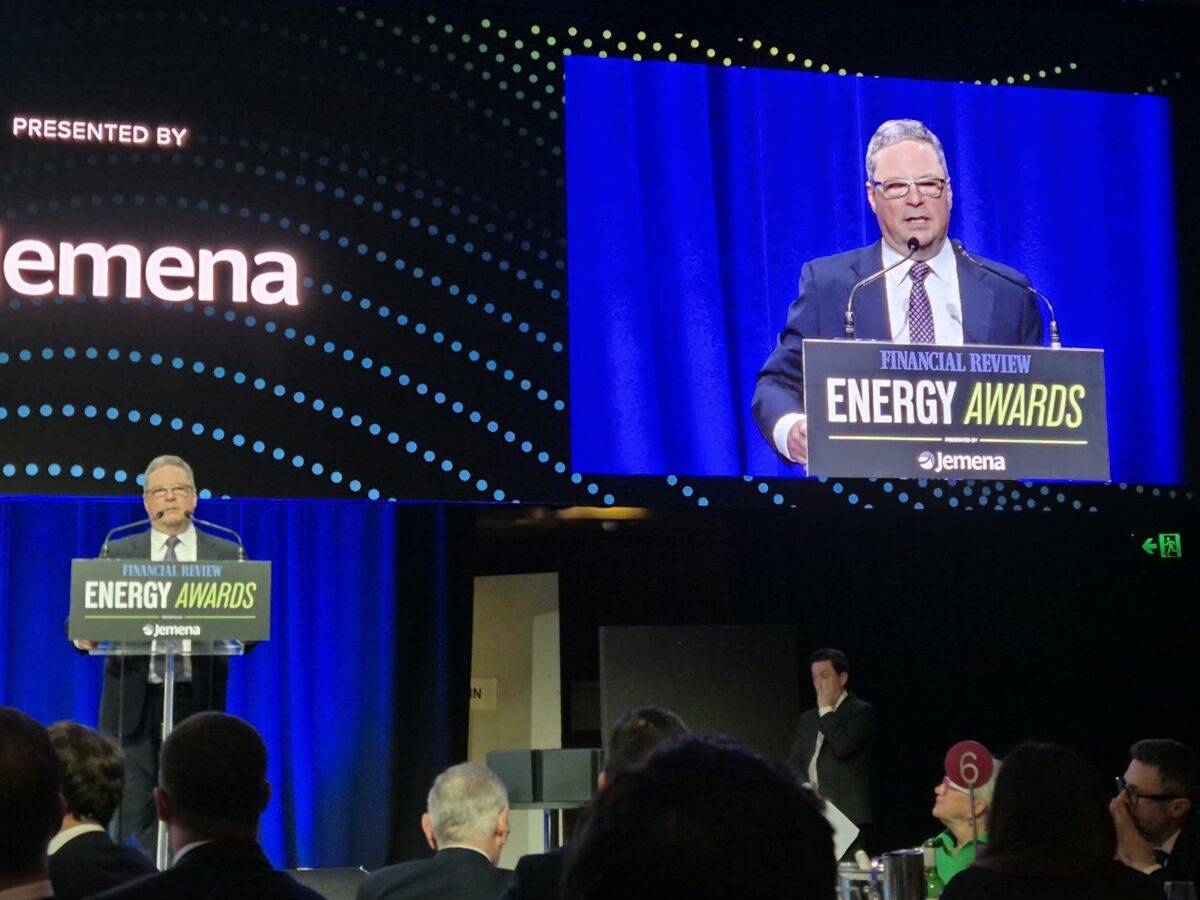
Queensland-based energy technology company EcoJoule Energy has been recognised for its innovative solutions to electricity network challenges, winning the Innovation – Challenger Award at the 2026 Australian Financial Review Energy Awards.

The award recognises businesses helping shape the future of Australia’s energy industry through innovation, excellence and achievement.

The recognition marks another milestone for EcoJoule, which has spent more than a decade developing technologies that help electricity networks accommodate growing rooftop solar generation, electric vehicles and other distributed energy resources.

EcoJoule’s flagship EcoVAR technology provides dynamic voltage regulation and phase balancing, while its EcoSTORE battery energy storage systems help improve network reliability and flexibility.

In an article published by The Australian Financial Review on 14 October, EcoJoule co-founder and CEO Dr Mike Wishart said Australia’s early adoption of rooftop solar had provided a competitive advantage.

“We’re the first ones out the gate, so we’re very lucky in that regard,” Dr Wishart told the AFR.

He said EcoJoule offered electricity networks a more affordable alternative to traditional infrastructure upgrades.

“Probably our biggest competitor would be power companies upgrading their networks, but we give them an option that is much cheaper than replacing poles and wires.”

The AFR also highlighted EcoJoule’s growing international footprint, with its technology distributed across 10 countries and increasing demand from the United Kingdom, Europe and South-East Asia.

Dr Wishart said the award reflected the dedication of EcoJoule’s employees and supporters.

“I’m incredibly grateful to our talented team, whose hard work, expertise and determination have made this possible. I also want to thank our customers, partners, investors and everyone who has supported us along the way.

“We’ve achieved a great deal together, but with growing demand for our technology around the world, I genuinely believe this is only the beginning.”

EcoJoule is now focused on accelerating its international expansion and demonstrating how Australian-developed technology can help electricity networks worldwide navigate the energy transition.

Why EcoJoule chooses LFP for batteries

EcoJoule uses lithium iron phosphate (LFP) cells in its battery energy storage systems. This bulletin sets out the fire-relevant differences between LFP and lithium nickel manganese cobalt oxide (NMC) cells, and the protection layers the EcoSTORE adds on top of cell chemistry.

Compared with NMC, LFP cells:

  • release negligible oxygen when the cathode breaks down, so the cell does not feed its own fire
  • reach a lower peak temperature and release heat more slowly, making cell-to-cell propagation less likely and slower
  • begin thermal runaway at a higher temperature, giving more margin before a fault becomes self-sustaining
  • contain no nickel or cobalt, and have a longer cycle life

LFP has lower energy density than NMC. For stationary network equipment, weight and volume are secondary to safety and service life, so this trade-off favours LFP.

Negligible

Oxygen released by LFP cathode on breakdown
NMC: releases oxygen

350–650 °C

LFP peak cell temperature in runaway
NMC: 550–900 °C

220–250 °C

LFP thermal runaway trigger temperature
NMC: 150–220 °C

None

Nickel or cobalt in LFP cells
NMC: both

Distribution-connected batteries sit on poles, footpaths and road reserves, close to homes and the public, and are usually unattended. The consequence of a fire at these sites is high, so EcoJoule reduces the likelihood of one at the source by selecting LFP.

CharacteristicNMCLFPRelevance
Cathode structure [4]Layered metal oxideOlivine phosphate with strong phosphorus–oxygen bondsDetermines thermal stability of the cathode
Oxygen release on cathode breakdown [4]Yes. Released oxygen supports combustion inside the cellNegligibleOxygen release makes an NMC fire self-sustaining and difficult to suppress
Thermal runaway trigger temperature* [2,3,11]Approx. 150–220 °C, lower for high-nickel variantsApprox. 220–250 °CHigher trigger temperature gives more margin before runaway becomes self-sustaining
Peak cell temperature in runaway* [1,5,11]Approx. 550–900 °CApprox. 350–650 °CLower peak temperature reduces heat transfer to adjacent cells
Rate of heat release [3,9]HighLow to moderateGoverns the speed of escalation
Cell-to-cell propagation [2,4]More likely and fasterLess likely and slowerPropagation turns a single-cell fault into a module or system fire
Vent gas [6,7,8]Larger volume per Ah, flammable, CO-richSmaller volume per Ah, flammable, H2-rich, with a lower flammability limitUnignited gas can accumulate, so enclosure ventilation and deflagration management are required for both. Vent gas from both is toxic
Cell energy density* [10]Approx. 190–275 Wh/kgApprox. 140–205 Wh/kg (current cells)Lower density is acceptable in stationary network equipment
Cycle lifeLowerHigherSupports long-life network assets
Nickel and cobalt contentYesNoSupply-chain and end-of-life considerations

Pole-mount EcoSTORE units apply eight protection layers. Layers 3 and 4 act independently of each other, so a single failure does not remove thermal protection [13].

LayerMechanismEffect
1  Cell chemistryLFP cells (Table 1)Lowers the likelihood of thermal runaway and of propagation between cells
2  Cell temperature monitoringThe BMS measures the temperature of every cell and reports it to the inverterCell-level thermal data for both protection layers below
3  Inverter deratingBattery current ramps down linearly from full output at 45 °C to zero at 60 °CCharge and discharge current is removed before cells reach 60 °C
4  BMS disconnectionThe BMS independently disconnects the batteries above 65 °C, the cells’ rated limitSecond, independent thermal protection
5  Module fusingFuses in each battery module open under short circuitRemoves a battery short circuit and arc flash as an ignition source
6  Cell pressure ventsEach cell has a designed vent that opens above a set internal pressureReleases gas before cell pressure reaches a hazardous level
7  Thermal managementFans draw air in at the base, across the modules and out through side vents. Heat shields with a convective air gap cover the enclosureHolds enclosure temperature close to ambient and limits solar heating
8  EnclosureAISI 304 stainless steel. A 4 mm back shields the pole. The inverter sits in a separate cabinet.Improved containment under unlikely failure mode. Separates a battery event from the pole and the inverter

EcoJoule recommends that network operators build the following checks into safe-work procedures before crews access an operating EcoSTORE [13]:

  • Review the unit’s recorded temperatures for the previous 24 hours for abnormal readings.
  • Inspect from a distance for smoke or flame at the exhaust vents, heat haze above the unit, or distorted panels.
  • From at least 3 m, measure the enclosure surface temperature on at least two sides with an infrared thermometer, then act on the result:
Surface temperatureAction
Below 75 °CSafe to approach. Wear gloves when opening or handling panels
75–100 °CRisk of burns on contact. Wait at least 30 minutes, re-measure and reassess
Above 100 °CTreat as unsafe and a possible thermal event. Confirm the unit is isolated from the grid, set an exclusion zone, post observers to prevent approach, and complete a risk assessment before any further action

EcoJoule Energy designs and manufactures low-voltage grid-edge power electronics in Brisbane, Australia. Its EcoVAR LV D-STATCOM is in field service with distribution utilities in Australia and internationally, and is available in pole-mount (EcoVAR Alto) and ground-mount (EcoVAR Terra) variants. EcoJoule’s technology relieves grid congestion and increases network hosting capacity, allowing the benefits of the energy transition to reach more users of the existing distribution network.


[1]  Golubkov A.W. et al., “Thermal-runaway experiments on consumer Li-ion batteries with metal-oxide and olivin-type cathodes”, RSC Advances 4 (2014) 3633–3642. https://doi.org/10.1039/C3RA45748F
[2]  “Thermal and mechanical safety assessment of type 21700 lithium-ion batteries with NMC, NCA and LFP cathodes – investigation of cell abuse by means of accelerating rate calorimetry (ARC)”, Batteries 9(5) (2023) 237. https://doi.org/10.3390/batteries9050237
[3]  “Comparison on thermal runaway and critical characteristics of cylindrical lithium-ion batteries: a review”, ACS Chemical Health & Safety. https://doi.org/10.1021/acs.chas.4c00121
[4]  “Thermal runaway propagation in automotive lithium-ion batteries with NMC-811 and LFP cathodes: safety requirements and impact on system integration” (2023). https://www.sciencedirect.com/science/article/pii/S2590116823000802
[5]  “Evaluation of the laminar burning velocity of various battery vent gases emitted during the thermal runaway of Li-ion cells” (2025). https://www.sciencedirect.com/science/article/pii/S0950423025001159
[6]  “NVPF sodium-ion versus NMC and LFP lithium-ion batteries in thermal runaway: vent gas composition and thermal analysis”, Batteries 11(9) (2025) 323. https://www.mdpi.com/2313-0105/11/9/323
[7]  “Review of gas emissions from lithium-ion battery thermal runaway failure — considering toxic and flammable compounds”, Journal of Energy Storage (2024). https://www.sciencedirect.com/science/article/pii/S2352152X24008739
[8]  “Thermal runaway characteristics and gas composition analysis of lithium-ion batteries with different LFP and NCM cathode materials under inert atmosphere”, Electronics 12(7) (2023) 1603. https://www.mdpi.com/2079-9292/12/7/1603
[9]  “Thermal runaway characterization of cylindrical lithium-ion and sodium-ion batteries with various sizes and energy contents”, Journal of Power Sources (2025). https://www.sciencedirect.com/science/article/pii/S0378775325010766
[10]  PowerUp / CEA-Liten, “NMC vs LFP: safety and performance in operation” (2025). https://powerup-technology.com/nmc-vs-lfp-safety-and-performance-in-operation/
[11]  Electric & Hybrid Vehicle Technology International, “LFP vs NMC thermal runaway” (2025). https://www.electrichybridvehicletechnology.com/technical-articles/lfp-vs-nmc-thermal-runaway.html
[12]  Battery Design / Akkuracy Battery Testing, “Objective safety analysis of NMC vs LFP” (2026). https://www.batterydesign.net/objective-safety-analysis-of-nmc-vs-lfp/
[13]  EcoJoule Energy, “EcoSTORE battery fire / explosion risk reduction and mitigation” (2023). Available on request.

EcoVAR control priority: Volt-VAR or phase balancing first?

The EcoVAR runs Volt-VAR droop and active power phase balancing at the same time. A priority setting decides which control gives way when a phase reaches its rating. Matching that setting to the X/R ratio of the network gets more correction from the same unit.

Two controls, one rating

Volt-VAR droop. Each phase injects capacitive VARs when its voltage is low and absorbs inductive VARs when it is high, with a configurable dead band around nominal. All three phases share one droop curve but respond to their own measured voltage, so one phase can inject while another absorbs.

Active power phase balancing. The EcoVAR draws active power from the high-voltage (lightly loaded) phase and returns it to the low-voltage (heavily loaded) phases. It has no energy store, so the three phase active powers always sum to zero. Phase voltage is the proxy for phase loading, so no series CTs are needed. Balancing also reduces neutral current back to the transformer.

ControlCorrects voltage unbalanceCorrects average voltage
Volt-VAR droop (Q)Yes, per phaseYes
Active power balancing (P)YesNo: P₁ + P₂ + P₃ = 0

If all three phases are high, for example during midday solar export, active power balancing cannot lower them. Only reactive power absorption can.

Priority modes and when to use them

Both controls run continuously. The priority setting acts only when a phase reaches its apparent power limit, and decides which control is curtailed.

SettingCapacity first toRemaining capacity toSuited to
Q-PriorityVolt-VAR droopPhase balancingReactive networks (higher X/R): overhead feeders with a significant reactive component; open wire overhead
P-PriorityPhase balancingVolt-VAR droopResistive networks (lower X/R): underground LV cable; long, small-conductor or heavily loaded LV feeders, bundled conductors

Where X dominates, a VAR moves voltage further than a watt. Where R dominates, a watt moves voltage further than a VAR. P-Priority is most effective where low X/R coincides with significant phase imbalance, such as single-phase rooftop solar or EV charging concentrated on one phase.

The priority can be changed remotely through the EcoFLEET™ Fleet Manager after commissioning. Parameter details are in section 5.4 of the EcoVAR User Manual.