Why engineers choose the EcoVAR D-STATCOM over network augmentation

Australia’s low-voltage networks are facing growing pressure from rooftop solar, EVs and changing patterns of electricity demand. For network engineers, managing the resulting voltage and power-quality issues has traditionally required costly and time-consuming network augmentation.

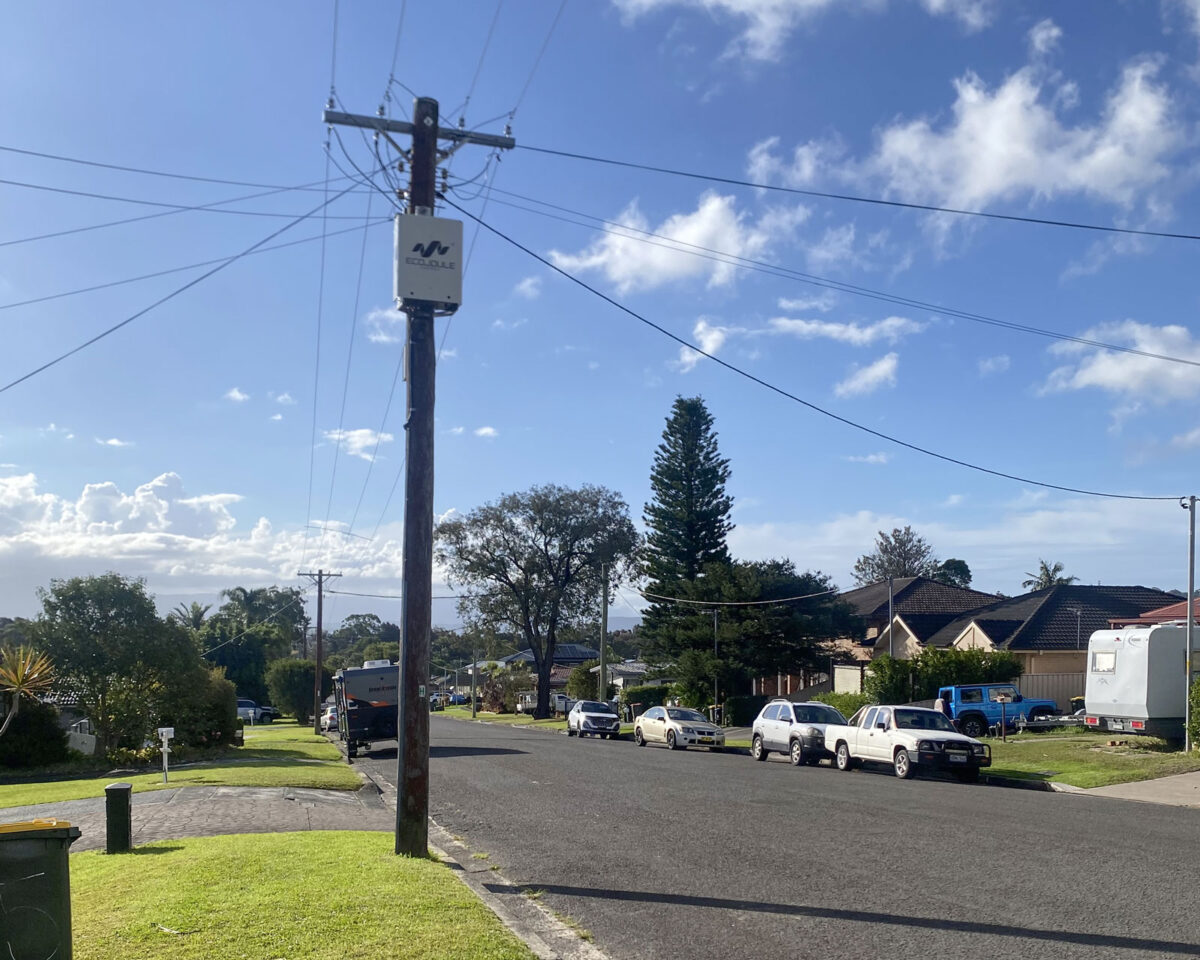
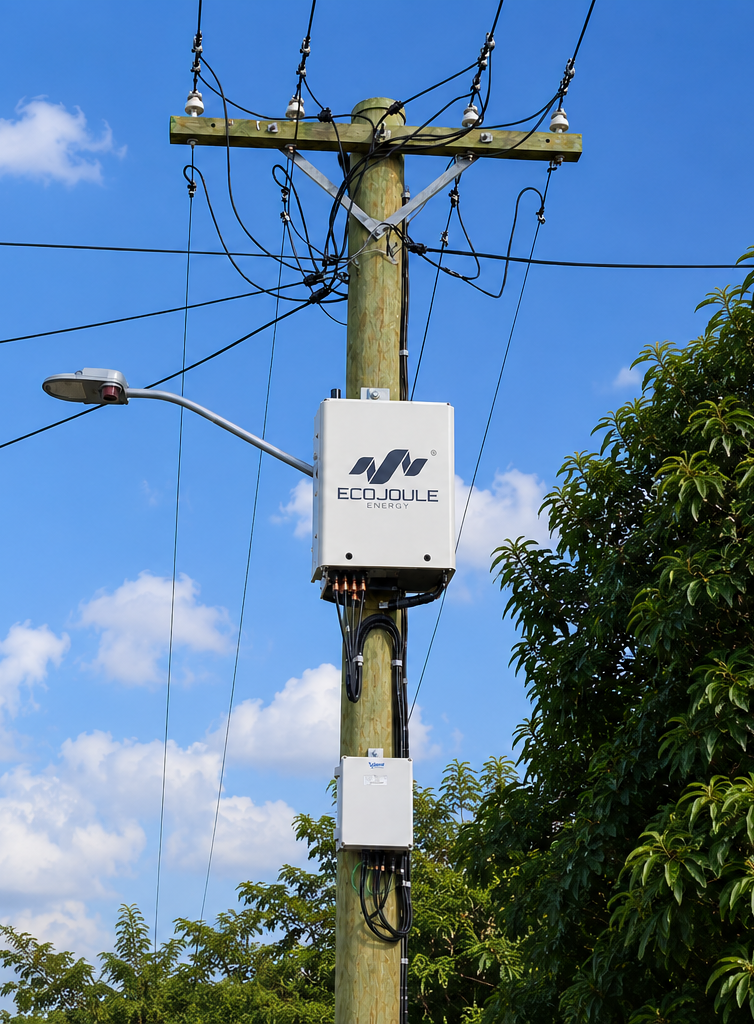
EcoJoule Energy’s EcoVAR D-STATCOM provides an alternative. Installed directly on the LV network, EcoVAR uses advanced power electronics to dynamically manage voltage, reactive power and phase imbalance without major infrastructure upgrades.

It does not replace augmentation where additional network capacity is required. Instead, EcoVAR gives engineers a faster, flexible and deployable option for addressing common LV constraints, improving network performance and potentially deferring capital expenditure.

Six problems now account for the majority of LV feeder complaints and constraint reports. The EcoVAR addresses all six from a single pole-mounted unit.

ProblemTypical cause on the LV feederEcoVAR response
OvervoltageReverse power flow from rooftop PV raising feeder voltage above the statutory limit, worst at the feeder extremities in the middle of the day.Absorbs reactive power and rebalances phase loading to reduce voltage at the point of connection.
UndervoltageCoincident evening demand from EV charging, heat pumps and air conditioning at the end of long feeders.Injects reactive power and transfers real load between phases to raise voltage.
Voltage unbalanceSingle-phase PV, EV chargers and heat pumps connected unevenly across the three phases.Actively transfers real power between phases, reducing unbalance, peak phase current, neutral current and feeder losses.
Voltage sagsStep changes in LV load such as motor starting, welding plant and DC fast charging.Sub-cycle detection and response limits the depth and duration of sags originating on the LV network. Sags originating from upstream HV faults are outside its scope.
HarmonicsRectifier front ends in PV inverters, EV chargers, variable speed drives and switched-mode power supplies.Active harmonic filtering injects counter-phase current on selected harmonic orders.
FlickerFluctuating load and rapidly varying generation on high-impedance and SWER-fed networks.Continuous dynamic response holds voltage through the fluctuation, reducing Pst and Plt.

Why the excursions matter

ConsequenceWhy it drives action
Regulatory compliance and licence riskSteady-state voltage limits are a statutory or licence obligation. Sustained excursions are reportable non-compliance, and the duty to correct sits with the distributor regardless of which connection caused it.
Customer complaints and cost to serveEach excursion generates complaints, site visits and repeat investigation on the same feeder until the cause is found. Complaint volume is itself a reported performance measure.
Equipment that will not operateVoltage outside the operating window causes EV chargers to derate or stop, PV inverters to trip and lose customer generation, and sensitive electronics to fail. As electrification scales, a charger that will not deliver is read by the customer as a network failure.

Why these problems are growing

The LV network was designed to deliver diversified, unidirectional power to loads of a few kilowatts each. Four changes have invalidated that design basis, and all four act on the same conductors:

ChangeEffect on the LV network
Gas heating to heat pumpsAdds several kilowatts of coincident winter evening load per premises.
EV chargingAdds 7 to 22 kW single-phase point loads with high coincidence after work hours.
Rooftop PVReverses power flow for part of the day and raises voltage at the feeder extremities.
High power electronicsInjects harmonic current and concentrates load unevenly across phases.

The network was never built for bidirectional flow at these power levels, and rebuilding it to suit is not economically feasible at the scale or pace the transition requires.

The traditional answer: augmentation

Augmentation resolves the constraint by reducing feeder impedance or adding capacity. It works, and it carries a fixed set of costs on every project:

Cost driverWhat it means in practice
Bespoke engineeringSite-specific design, load flow study and construction package for each location.
Approvals and accessEasements, consent, traffic management and environmental approvals.
Lead timeDesign to energisation typically measured in months, against constraints that are emerging in weeks.
Customer outagePlanned interruptions to complete the work, with the associated notification and reliability impact.
Stranding riskCapital committed to one location for the life of the asset, whether or not the constraint stays there.

What the EcoVAR does differently

The EcoVAR is a low voltage D-STATCOM. It differs from a conventional STATCOM in one respect that matters on LV feeders: it combines Volt-VAR reactive control with active phase balancing.

LV feeders are resistance-dominated. A conventional STATCOM controls voltage by exchanging reactive power, which acts on the reactive component of line impedance. On a feeder with a high R/X ratio that lever is limited, which is why reactive-only compensation is often ruled out for LV voltage correction.

The EcoVAR also transfers real power between phases through its 864 VDC secondary bus, acting on the resistive component. The two mechanisms together give the EcoVAR voltage authority on feeders where reactive compensation alone would not be sufficient, without reconductoring.

Installation and deployment

AttributeEcoVAR
Installation timeUnder two hours on a single existing pole.
Outage requiredNone. The unit is connected live to the LV network.
Engineering per siteNone. No bespoke design package, no reconductoring.
RedeploymentThe unit can be relocated when the constraint moves, so capital is not stranded.

The cost comparison

EcoJoule compares options on an equivalent annual cost (EAC) basis, which normalises assets with different capital costs and different lives. On that basis, modelling across a range of network cases shows the EcoVAR annualised cost is generally one third or less of the augmentation option that resolves the same constraint, driven by lower installed capital and the ability to redeploy the asset. The result is more constraint resolved per dollar of capital budget, and a lower cost outcome for the customers who pay for the network.

EAC outcomes depend on the augmentation scope being displaced, the discount rate and the asset lives assumed. EcoJoule can run the comparison against your own assumptions.

Where augmentation is still required

The EcoVAR does not add conductor or transformer rating. That matters less in practice than it first appears, because of how LV constraints actually present:

ConstraintRole of the EcoVAR
Genuine thermal limit on a balanced feederAugmentation is required. The EcoVAR restores voltage compliance within two hours while the augmentation project moves through the backlog, then redeploys to the next site once the works are energised.

Deferral economics

Because the unit is redeployable, it does not have to displace an augmentation project to earn its return. It only has to delay it. EcoJoule’s modelling indicates a deferral of approximately two years is sufficient for the EcoVAR to return its cost across most network cases. Where the augmentation backlog already exceeds twelve months, that threshold is largely met by the queue alone.

Where voltage non-compliance is already occurring and the augmentation project is a year or more from energisation, the alternative to the EcoVAR is not a faster upgrade. It is another year of non-compliance.

Request the comparison for your network

The EAC cost comparison model and supporting application notes are available on request.

sales@ecojoule.com
EcoVAR ALTO™ Commissioning Checklist Now Available

EcoJoule Energy has released a commissioning checklist for the EcoVAR ALTO™ 40 kVA LV STATCOM, available to customers and appointed installation contractors on request.

EcoJoule Energy has released a commissioning checklist for the EcoVAR ALTO™ 40 kVA LV STATCOM. It is available to EcoJoule customers and their appointed installation contractors on request.

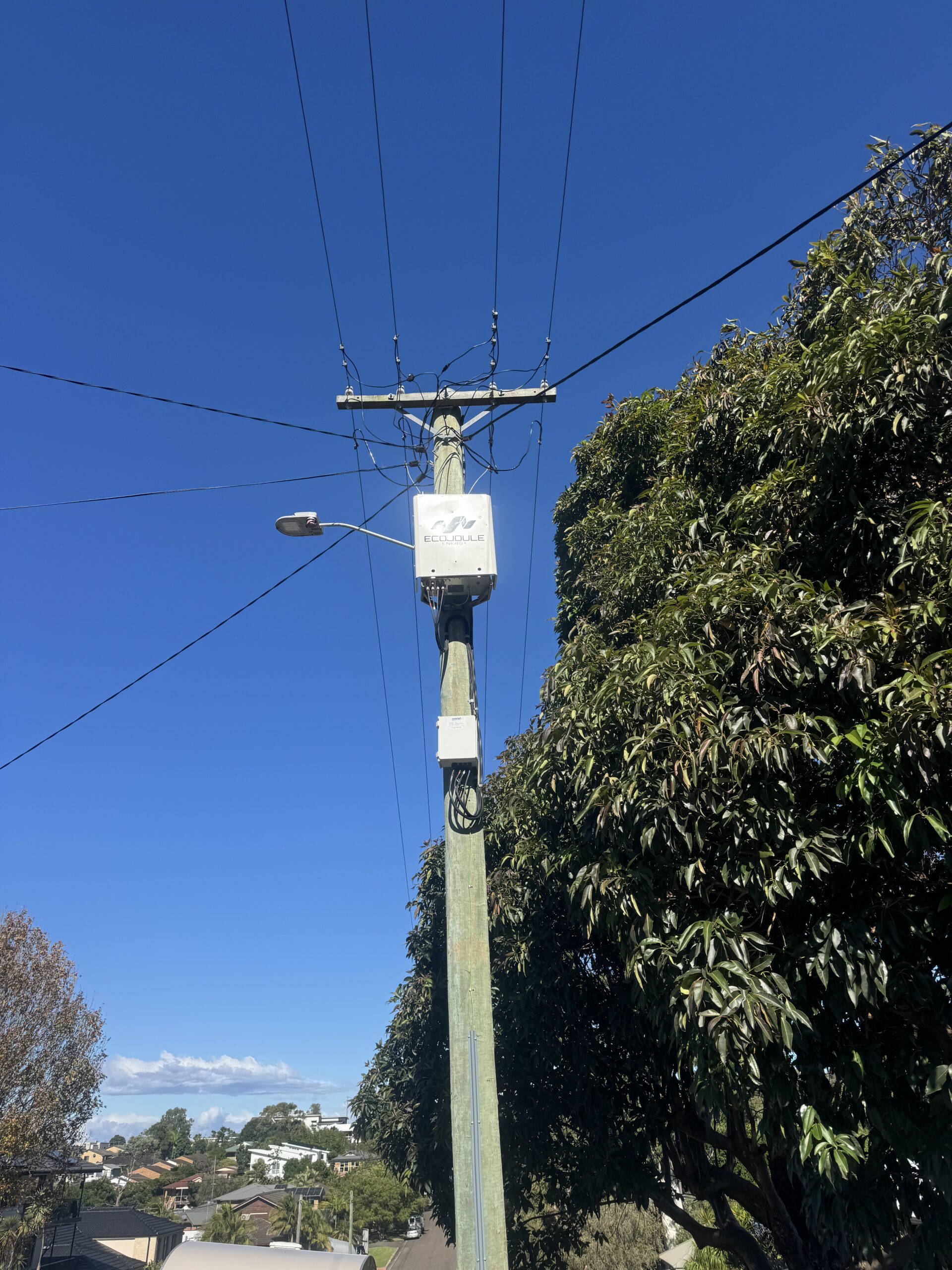
A trained crew installs and commissions an EcoVAR ALTO™ in under two hours, with no LV outage. Most of that time is mechanical. The commissioning steps that follow give clarity for a successful installation.

EJ-FRM-OPS-CHECK-0071 covers seven stages, from receipt of the pallet to signed sign-off:

  • Pre-installation ground checks
  • Site and mechanical installation
  • Electrical connection
  • Inspection before commissioning
  • Startup and commissioning procedure
  • Operational verification
  • Commissioning sign-off

Every check is referenced to the section of the EcoVAR ALTO™ User Manual that explains it, so a crew resolves a question at the pole rather than calling the depot.

The sign-off page records serial number, pole or asset number, modem IP address, settings applied and first-run measurements.

Document details

Document IDEJ-FRM-OPS-CHECK-0071
TitleEcoVAR ALTO™ Commissioning Checklist
Version1 — initial release
Issued14 August 2026
Applies toEcoVAR ALTO™ 40 kVA LV STATCOM (Model EV40), pole-mounted on the LV overhead network
AvailabilityEcoJoule customers and their appointed installation contractors, on request

How to request a copy

Email service@ecojoule.com. If you have an installation programme starting, tell us the crew size and we will walk your commissioning engineers through the EcoFLEET™ steps beforehand.

About EcoJoule Energy

EcoJoule Energy designs and manufactures low voltage grid equipment in Loganholme, Queensland. The EcoVAR LV STATCOM regulates voltage, balances phases and filters harmonics on the distribution network.

Why add remote communications to your LV STATCOMs

What a connected EcoVAR gives a distribution utility, and how the connection is made.

Most utilities can describe the state of their HV and MV networks in near real time. Below the distribution transformer, the picture thins out. Smart meters report at the point of supply, usually on 15 or 30 minute intervals, and they tell you what a customer connection looked like, not what the feeder was doing between the readings.

An LV STATCOM sits in that gap. It is already measuring the LV feeder continuously, because it has to: voltage, current and harmonic content on each phase are the inputs to its control loop. Whether that measurement stays inside the unit or reaches your planning and operations teams is a decision made at installation, and it costs very little to make the right one.

This article sets out three reasons to connect your LV STATCOMs, and then the practical detail of how it is done on the EcoVAR.

1. Visibility of the LV network

A connected EcoVAR reports three classes of data that most utilities have never held for the LV network at scale.

Voltage. Per phase voltage, as well as STATCOM current, active and reactive power, at the point of installation, at a resolution well beyond metering intervals. Because the EcoVAR is typically installed at the electrical problem, at the end of a long feeder or on a section with heavy solar export, the data comes from the location where your planning assumptions are least reliable. Phase by phase reporting also quantifies imbalance directly, rather than inferring it from connection records that may be decades out of date.

Harmonics. Individual harmonic orders and total distortion, per phase, over time. Harmonic distortion on LV networks is rising with inverter based generation, EV charging and switched mode loads, and most utilities have no ongoing measurement of it. Connected EcoVARs give you a distortion baseline for the sections where you have units installed, and a time series that shows when distortion is worst and how it correlates with load and generation.

Oscillography. Triggered waveform captures around events: voltage dips, transients, and protection operations. This is the class of data that separates a monitoring device from a meter. When a customer reports flicker or equipment damage, a waveform capture from the LV feeder gives an engineer something to analyse rather than something to guess at.

None of this displaces smart metering. It complements it. Smart meters tell you about load profile and customer experience at the connection point. A connected STATCOM tells you about the behaviour of the feeder itself, including reactive power flow and distortion that metering does not report.

The data is available for export into network modelling, digital twin and visualisation platforms. Measured LV voltage and harmonic profiles improve the calibration of LV models that are otherwise built on assumed diversity factors and nominal impedances. For utilities running LV network visibility programmes, connected STATCOMs are an additional measurement layer at sites you were already investing in.

2. Remote adjustment of setpoints and droop curves

An EcoVAR is commissioned with a voltage setpoint and a droop characteristic that suit the feeder as it is understood on the day. Feeders change. Solar penetration increases, EV charging arrives, load transfers occur, and seasonal load composition shifts.

With communications in place, setpoints and droop curves are changed from the office. Without them, every settings change is a truck.

Conservation Voltage Reduction

Conservation Voltage Reduction (CVR) is the deliberate operation of the distribution network toward the lower end of the permitted voltage range in order to reduce energy consumption and peak demand. It works because a meaningful share of connected load is voltage dependent. Resistive heating, some lighting, motors and transformer no load losses all draw less power at lower voltage, and lower voltage also reduces network losses.

The metric used to quantify the effect is the CVR factor: the percentage reduction in demand or energy per one percent reduction in voltage. Published studies commonly report values of about 0.5 to 1.0 for active energy, with higher factors for reactive power and seasonal variation depending on load composition. Utility programmes typically report energy savings in the range of 1 to 4 per cent, achieved without any action by customers.

The constraint on CVR is the low point. A utility can only lower voltage until the worst served customer on the worst feeder reaches the statutory minimum. Everything above that point is headroom the utility cannot use.

This is where LV reactive support and CVR intersect. An EcoVAR clamps the voltage at the new setpoint on the network, controlling the voltage down the LV feeder, not simply at the transformer.

Communications make that relationship manageable. As a CVR programme is tuned, the target voltages at the LV support points need to move with it, seasonally and as the network changes. Doing that remotely across a fleet is straightforward. Doing it with field visits is not.

3. Condition monitoring and evidence led maintenance

The EcoVAR requires no scheduled maintenance. There are no filters to change, no fans to service and no consumables. Stated plainly, that means a time based maintenance programme adds cost without adding reliability.

The alternative is to attend site when the equipment tells you to. A connected fleet reports internal temperatures, converter status, alarm and event history, availability, and the reactive power the unit is actually delivering against what the network is asking of it. That supports three decisions a maintenance planner needs to make:

  • Which units, if any, need attention.
  • Whether a reported network problem is the STATCOM or the network.
  • Whether units are correctly sized and set for the feeders they are on, or whether some are running at their limits while others are barely working.

The third point tends to be the one that changes budgets. Fleet data shows where a unit is under utilised and could be redeployed, and where a feeder has outgrown the support installed on it.

There is a fair objection here. If the equipment is maintenance free, why monitor it? Because maintenance free is a statement about scheduled intervention, not a claim that nothing will ever need attention. Monitoring is what lets you replace a calendar with evidence, and it is also what lets you prove availability to your own asset management function.

How to add communications to an EcoVAR

Physical provisions

Every EcoVAR provides:

  • An RJ45 Ethernet data port for the communications device.
  • A DC auxiliary supply, nominally 15 V, 15 W, for powering that device.

The utility selects the communications bearer. In practice this is usually a cellular router where no utility network exists at the site, or a connection into an existing utility WAN, fibre or mesh where one does. Because the EcoVAR supplies the router, no separate supply, meter or service connection is required. The communications device is powered from the asset it is monitoring.

Three communications paths

PathWhat it delivers
DNP3Integration into conventional SCADA and ADMS platforms. LV measurements and status appear in the system your control room already uses, extending SCADA visibility down to individual LV feeders.
ModbusThe same SCADA integration for utilities and RTUs standardised on Modbus. For utilities with mature SCADA and established cyber processes, DNP3 or Modbus is usually the path of least resistance.
Secure APIConnects the unit to EcoFLEET, the EcoJoule fleet management and configuration platform. EcoFLEET aggregates field performance data across the fleet, provides real time dashboards, and handles remote firmware and settings updates.

EcoFLEET is normally hosted within the utility environment, under the utility security controls. EcoJoule can host it for utilities that want an additional service layer, and that arrangement is agreed case by case.

The paths are not mutually exclusive. A common arrangement is DNP3 or Modbus into SCADA for operational monitoring and control, with the Secure API to EcoFLEET for engineering data, fleet analytics and firmware management.

What the data lets you find

Connected LV STATCOMs turn a class of LV faults from customer reported into utility detected:

  • Harmonic sources. Distortion measured at multiple points identifies which section a source sits on.
  • Blown LV fuses and open neutrals. These appear immediately as a phase level anomaly.
  • Voltage excursions and flicker. With waveform evidence attached, rather than a description over the phone.

Historically the first indication of most of these was a customer complaint, which means the problem had already persisted long enough for someone to be affected by it, and long enough for the evidence to be gone by the time a crew arrived. A connected EcoVAR reports the condition when it occurs.

The commercial case in one line

The hardware provision is already in the unit. The incremental cost of connecting an EcoVAR is a communications device and its data plan. What you get in return is a settings change that costs nothing instead of a truck, LV data you have not previously been able to buy at this resolution, and a maintenance programme driven by condition rather than calendar.

If you have EcoVARs in service without communications, we can scope the retrofit against your existing units. If you are planning a deployment, the time to specify the communications path is now, while the installation is still on paper.

References on Conservation Voltage Reduction

  • US EPA / ENERGY STAR, Voltage Optimisation and CVR: Evaluation, Measurement and Verification Best Practice.
  • Diaz-Aguilo et al., Field Validated Load Model for the Analysis of CVR in Distribution Secondary Networks, IEEE Transactions on Power Delivery.
  • Padullaparti et al., Conservation Voltage Reduction with DERMS, Grid Edge and Legacy Devices, NREL, 2023.
  • Assessment of Conservation Voltage Reduction in Distribution Networks with Voltage Regulating Distribution Transformers, Energies 16(7), 2023.
  • Estimation of Conservation Voltage Reduction Factors Using Measurement Data of the KEPCO System, Energies 10(12), 2017.

EcoJoule Completes First Export To Portugal

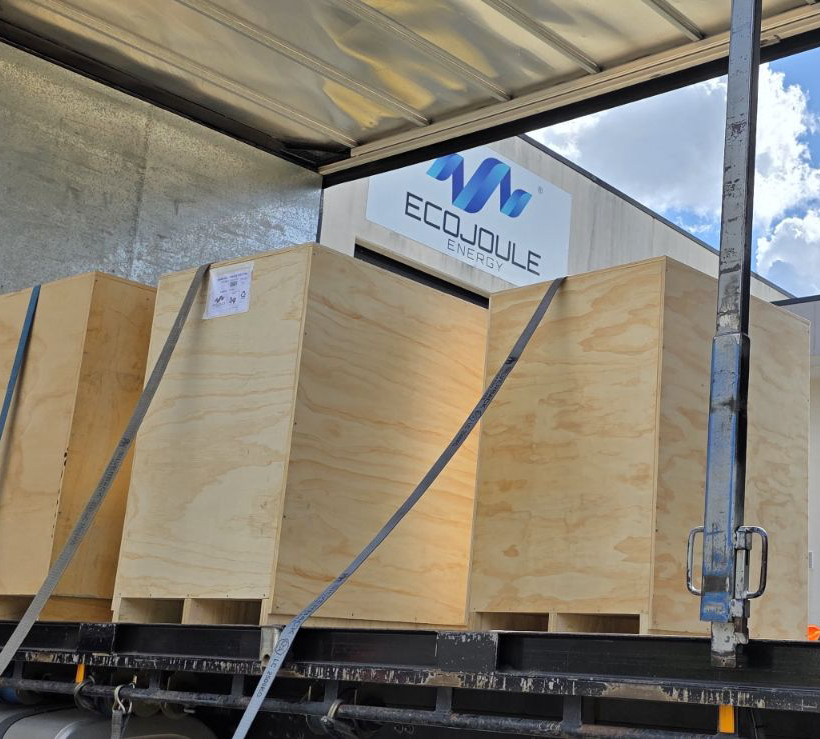
EcoJoule Energy has completed the first export of its EcoVAR low-voltage distribution STATCOM to Portugal, opening a new European market for the Australian manufacturer.

The 40 kVAR three-phase units were built at the company’s Brisbane facility and dispatched this month. With the sale, EcoVAR technology is now in service across four continents — Oceania, Asia, the Middle East and Europe.

The export milestone follows a $15 million capital raise EcoJoule completed in 2025, led by Ellerston Capital and Fifth Estate Asset Management, and including a $3 million commitment from the Clean Energy Finance Corporation (CEFC) through its Powering Australia Technology Fund.

The investment has supported EcoJoule to build manufacturing capacity, inventory and its commercial team, the foundations for meeting demand at home and, increasingly, overseas.

“We backed EcoJoule through the Powering Australia Technology Fund to help a market-leading Australian technology company scale up and get its grid solutions to more customers. Seeing that technology now exported to Europe shows Australian clean energy innovation competing on the world stage, and at the same time helps networks here at home and abroad integrate more renewable energy.”
— Malcolm Thornton, Head of Growth Capital, CEFC
Tweet

The EcoVAR is a low-voltage distribution STATCOM. It supplies dynamic reactive power, balances load across phases and filters harmonics directly on the distribution network.

It installs without a network outage, and helps distributors hold voltage within limits and connect more rooftop solar to existing feeders, deferring or avoiding conventional network augmentation.

“I started EcoJoule after seeing, at a utility, how quickly rising solar exports push voltage outside limits on the low-voltage network. The EcoVAR was designed to correct that at the point where it occurs, without taking customers off supply. The CEFC backing has helped us take that technology from Australia to the world.”
— Dr Mike Wishart, Founder, EcoJoule Energy
Tweet

Dr Wishart developed the EcoVAR after observing voltage problems firsthand while working at an electricity utility, drawing on a career formerly leading research and development for global multinational electrical companies.

“Portugal is the newest market to adopt the EcoVAR, and it shows technology designed and built in Australia is competitive globally. With CEFC’s support behind our scale-up, our task is to keep making it straightforward for networks anywhere to access it.”

“Portugal is the newest market to adopt the EcoVAR, and it shows technology designed and built in Australia is competitive globally. With CEFC’s support behind our scale-up, our task is to keep making it straightforward for networks anywhere to access it.”
— Martin van der Linde, Chief Commercial Officer, EcoJoule Energy
Tweet

Mr van der Linde recently joined EcoJoule as Chief Commercial Officer to lead the company’s global market development.